
Kenya’s Cabinet has formally approved the Architectural and Quantity Surveying Practitioners Bill, 2026, introducing stringent criminal penalties—including fines of up to Ksh2 million or two years’ imprisonment—for individuals who fraudulently secure professional registration or practicing licenses.
The executive dispatch cleared on Friday, October 9, 2026, signals a major overhaul of Kenya’s construction oversight framework, replacing a 92-year-old statutory regime amid worsening national building safety crises.
| Regulatory Provision | Key Statutory Details |
| Core Offence | Fraudulent Registration or Licensing |
| Primary Statutory Penalty | Up to Ksh2 million fine or 2 years’ imprisonment |
| Separate Offence (Unlicensed Practice) | Up to Ksh3 million fine |
| Repealed Statutory Framework | Architects and Quantity Surveyors Act (1934) |
| Old Framework Max Penalty | Ksh5,000 maximum fine |
| Regulated Professions | Architects, Quantity Surveyors, Landscape Architects, Interior Designers, Construction Project Managers |
Strict Licensing and Heavier Fines Replace Colonial-Era Building Laws
The proposed law completely repeals the outdated Architects and Quantity Surveyors Act of 1934, which capped maximum fines for unlawfully assuming protected titles at a nominal Ksh5,000.
Beyond targeting fraudulent credentialing, the legislation establishes mandatory annual practicing licenses across five key built-environment professions:
- Architects
- Quantity Surveyors
- Landscape Architects
- Interior Designers
- Construction Project Managers
According to official parliamentary tracking documentation, the Bill distinctly establishes a separate penalty of up to Ksh3 million for practicing without a valid annual license, differentiating routine non-compliance from intentional registration fraud.
While Parliament considered an earlier amendment in February 2023 proposing a Ksh1 million fine, the Cabinet’s approved 2026 text doubles that figure to deter rogue operators effectively.
Crisis in the Built Environment: Inspections Expose Widespread Structural Risk
The legislative push directly responds to severe audit findings across major urban centers.
On January 9, 2026, the Institution of Engineers of Kenya (IEK) revealed that a comprehensive National Building Inspectorate assessment of roughly 15,000 structures in Nairobi yielded alarming compliance figures:
- Safe: Only 15% passed inspection.
- Fair Condition: 8% required structural monitoring.
- Unsafe: 77% failed baseline safety standards.
Former IEK President Shammah Kiteme highlighted that rogue professional practice and lax oversight remain core contributors to structural integrity failures across the country.
Disasters in Nairobi and Mombasa Highlight Systemic Supervisory Gaps
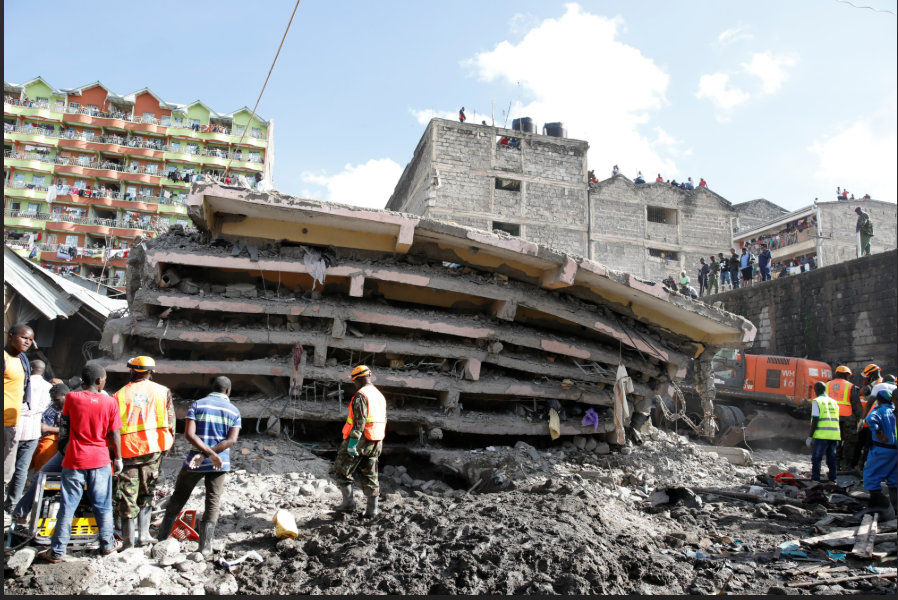
The urgency of the new sanctions follows high-profile structural collapses across the country.
On January 2, 2026, the collapse of Manzil Towers in Nairobi’s South C estate resulted in two fatalities. Subsequent findings by the National Construction Authority (NCA) revealed that while the development was approved for 12 storeys, developers erected 14 floors prior to failure.
Similarly, official findings from the April 2025 partial collapse of an 11-storey building in Mombasa cited:
- Credential Misuse: Unlawful utilization of licensed architects’ and engineers’ registration details.
- Defective Oversight: Inadequate site testing, flawed engineering designs, and absent site supervision.
- Regulatory Failure: Weak monitoring mechanisms by local development authorities.
Industry Analysis: Will Penalties Alone Stop Structural Collapses?
While built-environment professional associations have welcomed the proposed Ksh2 million fine and mandatory licensing, structural engineers and urban policy experts caution that stiffer statutory fines address only part of the problem.
For the Architectural and Quantity Surveying Practitioners Bill, 2026 to meaningfully reduce structural failures once passed by Parliament, regulatory bodies such as the National Construction Authority (NCA) and county planning departments must pair statutory penalties with proactive ground enforcement, frequent site audits, and swift prosecution of non-compliant developments.
Other News: Cabinet Approves 909km Road Project for 10 Counties